
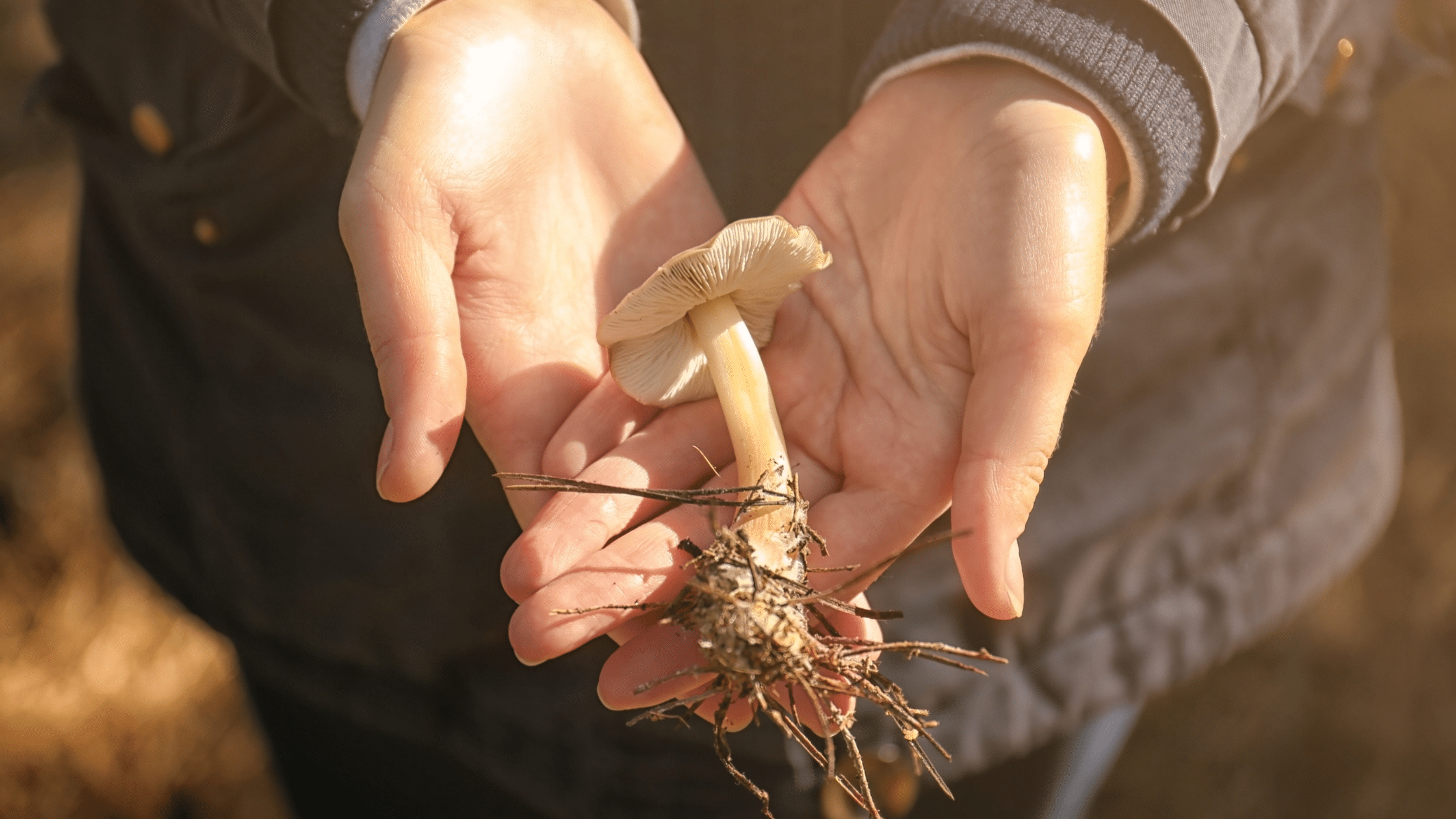
Medicinal mushrooms are having a moment. From cordyceps to reishi, this "shroom boom" is driven by a growing interest in various mushroom’s ability to support common health concerns, such as better sleep, stronger immunity, and sharper cognition. But, even though mushrooms are experiencing a surge in popularity, their use is actually rooted in a deep tradition of ancient healing.
The Medicinal History of Mushrooms
The medicinal use of mushrooms dates back centuries. Hippocrates promoted these functional fungi as a potent anti-inflammatory as early as 450 BC.1 Mushrooms have also played a significant role in Traditional Chinese Medicine (TCM), often used to treat infections and gastrointestinal problems.2 They’ve also been a mainstay in Ayurvedic medicine, where mushrooms like reishi are used to promote longevity and overall well-being.3
What do these ancient medical systems have in common? They’ve each recognized that different mushrooms possessed different medicinal properties, making them suitable for a variety of specific health issues. For example, lion’s mane has traditionally been used to support cognition while chaga is known for its immune-strengthening properties.
Modern science is finally recognizing what these time-honored healing systems have known for hundreds of years. As a result, a growing number of studies are unearthing the bioactive compounds responsible for medicinal mushroom’s antioxidant, immune-modulating, antiviral, and anti-inflammatory effects.4
Popular Mushrooms and Their Uses
While there are more than 100 different species of medicinal mushrooms, here’s an overview of five of the most popular and widely studied varieties.
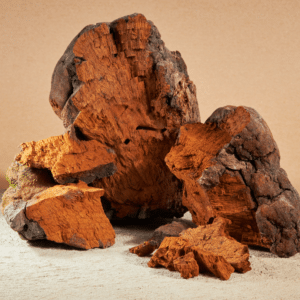
Chaga. Packed with antioxidant, anti-inflammatory, antimicrobial, and immune-modulating properties, chaga mushrooms are a rich source of beta-glucan—a polysaccharide that helps calm overactive immune system responses. For instance, according to one analysis of 34 randomized controlled studies, beta glucans helps bolster immune defenses against upper respiratory infections like colds and flu.5 Other studies show that chaga can also tame excess inflammation thanks to a triterpene called betulin.6 What’s more, research shows that chaga stimulates the production of white blood cells that fight off viruses and bacteria.7
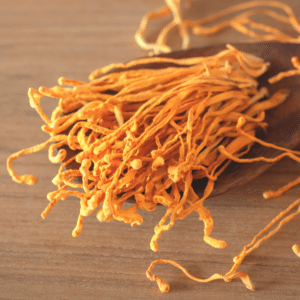
Cordyceps. One of the most famous mushrooms used in TCM, cordyceps works by regulating the body’s adaptive (specialized) and innate (general) immune response. Research shows that it increases the production of cytokines called interleukins that regulate infection-driven inflammation and fever. It also boosts tumor necrosis factor-α, a pro-inflammatory cytokine that plays a key role in the immune system’s response to infection and injury. Cordyceps also enhances natural killer (NK) cell activity, making them more effective at killing virus-infected cells.8,9 A recent trial of healthy adults found that supplementing with cordyceps increased NK cell activity in all the participants while reducing inflammatory interleukins.10 Another randomized, controlled trial involving 65 people with upper respiratory infections found that those taking cordyceps recovered faster and experienced milder symptoms.11

Lion’s Mane. With its distinctive cascading white tendrils, lion’s mane provides protein, B vitamins, and minerals like potassium, zinc, and manganese, along with various antioxidant and anti‑inflammatory compounds.12 But this mushroom’s main claim to fame is its ability to support cognitive function and mood. In a double-blind randomized placebo-controlled trial of 30 seniors with mild cognitive impairment, supplementing with lion’s mane for 16 weeks resulted in better scores on a cognitive function scale compared with a placebo.13 In another double-blind randomized placebo-controlled trial of 31 healthy adults, all over the age of 50, taking lion’s mane for 12 weeks improved cognitive function based on the Mini Mental State Examination (MMSE).14 Lion’s mane may also help younger people. A 28-day trial of healthy adults, ages 18-45, found that supplementation improved the speed of cognitive performance and helped to reduce mental stress.15

Reishi. Often called the “mushroom of immortality,” reishi is perhaps the best-known of all the medicinal mushrooms. Traditionally used for immune enhancement and as an anti-inflammatory, modern research is focusing on its adaptogenic and sleep-inducing capabilities. Findings in the journal Scientific Reports show that reishi shortens the amount of time it takes to fall asleep and prolongs sleep time by increasing neurotransmitters like serotonin via pathways that involve the gut microbiota.16 One small observational study found that taking reishi 30-60 minutes before bedtime improved sleep latency and sleep quality.17 And a pilot clinical trial involving 48 participants found that supplementing with reishi reduced sleep disturbances while improving the feelings of anxiety and depression.18

Turkey Tail. Famous for its powerful immune-boosting polysaccharides like beta-glucan, turkey tail mushrooms helps regulate the body’s immune response, making sure it’s not too weak and not too strong, but just enough to ward off pathogens that may lead to illness and disease.19 This goldilocks ability is fortified by an abundance of additional bioactive compounds that possess antioxidant, antimicrobial, antiviral, antifungal, and anti-inflammatory properties. 19,20 Together, these compounds support immune resistance to bacterial and viral threats. This was shown in an Australian study that exposed cells from older adults that had been treated with a turkey tail extract to a variety of viruses, including those causing the common cold and flu.21 A study of 91 women with a Human Papillomavirus (HPV) infection found that 84.9 percent of those treated with a turkey tail-based vaginal gel had a normal pap smear and colposcopy (a test to identify abnormal cells) six months after treatment. This compared to 64.5 percent of those who didn’t use the gel. In addition, 59.6 percent of women treated were completely cleared of the virus compared to 41.9 percent of those who weren’t.22
Fruiting Bodies vs. Mycelium—What’s the Difference?
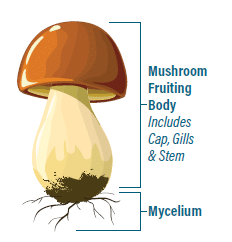 Many mushroom supplements rely on a mushroom’s mycelium, the underground thread-like network of filaments that are similar to roots. Mycelium is typically grown on grain that contains a high percentage of starch. The problem is, this method dilutes the concentration of beneficial compounds, making it less potent. The fruiting body—which is the visible part of a mushroom—is more concentrated and generally has higher levels of beneficial compounds like beta-glucans, triterpenes, flavonoids, and antioxidants.23 This means that supplements containing mushroom fruiting bodies are considered to provide more concentrated amounts of the beneficial compounds responsible for their medicinal actions.
Why then do many manufacturers opt to use mycelium? Harvesting the actual mushroom fruiting body requires more complex environmental controls and longer cultivation times. This makes it more labor intensive and costly. Mycelium, on the other hand, can be created using industrial processes, making it cheaper and faster to produce. To ensure you’re getting the more potent fruiting bodies, it’s smart to check the “supplement facts” panel on the medicinal mushroom supplement you’re considering.
While medicinal mushrooms are one of the hottest ingredients in supplements today, they’re not just the latest trend. Whether you’re looking for immune, cognitive, or sleep support, medicinal mushrooms are an ancient, yet science-backed, solution to help you achieve your health goals naturally.
References
- Stamets P, Zwickey H. Medicinal mushrooms: ancient remedies meet modern science. Integrative Medicine (Encinitas). 2014;13(1):46-7.
- Gravina AG, Pellegrino R, Auletta S, et al. Hericium erinaceus, a medicinal fungus with a centuries-old history: Evidence in gastrointestinal diseases. World Journal of Gastroenterology. 2023 May 28;29(20):3048-65.
- Chuang MH, Chiou SH, Huang CH, et al. The lifespan-promoting effect of acetic acid and Reishi polysaccharide. Bioorganic & Medicinal Chemistry. 2009;17(22):7831-40.
- Venturella G, Ferraro V, Cirlincione F, et al. Medicinal mushrooms: bioactive compounds, use, and clinical trials. International Journal of Molecular Science. 2021;22(2):634.
- Vlassopoulou M, Yannakoulia M, Pletsa V, et al. Effects of fungal beta-glucans on health—a systematic review of randomized controlled trials. Food & Function. 2021;12(8):3366-80.
- Fordjour E, Manful CF, Javed R, et al. Chaga mushroom: a super-fungus with countless facets and untapped potential. Frontiers in Pharmacology. 2023;14:1273786.
- Géry A, Dubreule C, André V, et al.Chaga (Inonotus obliquus), a future potential medicinal fungus in oncology? A chemical study and a comparison of the cytotoxicity against human lung adenocarcinoma cells (A549) and human bronchial epithelial cells (BEAS-2B). Integrative Cancer Therapies. 2018;17(3):832-43.
- Lin B, Li S. Cordyceps as an Herbal Drug. In: Benzie IFF, Wachtel-Galor S, editors. Herbal Medicine: Biomolecular and Clinical Aspects. 2nd edition. Boca Raton (FL): CRC Press/Taylor & Francis; 2011. Chapter 5.
- Das G, Shin HS, Leyva-Gómez G, et al.Cordyceps : A review on its immune-stimulatory and other biological potentials. Frontiers in Pharmacology. 2021;11:602364.
- Ontawong A, Pengnet S, Thim-Uam A, et al. A randomized controlled clinical trial examining the effects of Cordyceps militaris beverage on the immune response in healthy adults. Scientific Reports. 2024;14(1):7994.
- Dubhashi S, Sinha S, Dwivedi S, et al. Early trends to show the efficacy of Cordyceps militaris in mild to moderate COVID inflammation. Cureus. 2023;15(8):e43731.
- Contato AG, Conte-Junior CA. Lion’s mane mushroom (Hericium erinaceus): A neuroprotective fungus with antioxidant, anti-inflammatory, and antimicrobial potential-A narrative review. Nutrients. 2025;17(8):1307.
- Mori K, Inatomi S, Ouchi K, et al. Improving effects of the mushroom Yamabushitake (Hericium erinaceus) on mild cognitive impairment: a double-blind placebo-controlled clinical trial. Phytotherapy Research. 2009;23(3):367-72.
- Saitsu Y, Nishide A, Kikushima K, et al. Improvement of cognitive functions by oral intake of Hericium erinaceus. Biomedical Research. 2019;40(4):125-31.
- Docherty S, Doughty FL, Smith EF. The acute and chronic effects of lion’s mane mushroom supplementation on cognitive function, stress and mood in young adults: A double-blind, parallel groups, pilot study. 2023;15(22):4842.
- Yao C, Wang Z, Jiang H, et al. Gandoderma lucidum promotes sleep through a gut microbiota-dependent and serotonin-involved pathway in mice. Scientific Reports. 2021;11:13660.
- Malghan A. Sleep quality improvements associated with adenine-containing reishi mushroom elixir with nanofiber delivery: A 30-day observational study. 2025;10.13140/RG.2.2.29906.21449.
- Zhao H, Zhang Q, Zhao L, et al. Spore powder of Ganoderma lucidum improves cancer-related fatigue in breast cancer patients undergoing endocrine therapy: A pilot clinical trial. Evidence- Based Complementary and Alternative Medicine. 2012;2012:809614.
- Camilleri E, Blundell R, Baral B,et al. A comprehensive review on the health benefits, phytochemicals, and enzymatic constituents for potential therapeutic and industrial applications of Turkey tail mushrooms. Discover Applied Science. 2024;6:
- Ajibola OO,Nolasco-Hipolito C, Carvajal-Zarrabal O, et al. Turkey tail mushroom (Trametes versicolor): an edible macrofungi with immense medicinal properties. Current Opinion in Food Science. 2024;58:101191.
- Williams LM, Berthon BS, Stoodley IL, et al. Medicinal mushroom extracts fromHericium coralloides and Trametes versicolor exert differential immunomodulatory effects on immune cells from older adults In Vitro. Nutrients. 2023;15(9):2227.
- Serrano L, López AC, González SP, et al. Efficacy of a Coriolus versicolor-based vaginal gel in women with Human Papillomavirus-dependent cervical lesions: The PALOMA study. Journal of Lower Genital Tract Disease. 2021;25(2):130-6.
- Berger RG, Bordewick S, Krahe NK, et al. Mycelium vs. fruiting bodies of edible fungi – A comparison of metabolites. 2022;10(7):1379.
This article is for informational purposes only. This article is not, nor is it intended to be, a substitute for professional medical advice, diagnosis, or treatment and should never be relied upon for specific medical advice.
Share this Post