
Kyolic® Aged Garlic Extract™ Found to Reduce Gingivitis

How Does It Occur

Typically attributed to poor oral hygiene, gingivitis commonly occurs because a film of plaque, or bacteria, accumulates on the teeth. Over time, this can cause red, inflamed gums that bleed easily when a person brushes their teeth. Left untreated, gingivitis can progress to a more serious case of periodontitis that can lead to tooth loss. The Centers for Disease Control and Prevention and the National Institute of Dental and Craniofacial Research report that gingivitis is also associated with an increased risk of several diseases including cardiovascular disease.

While brushing and flossing are an important part of treatment for the condition, this new study, which appeared in The Journal of Clinical Dentistry, found that AGE improves symptoms compared to placebo. The randomized, controlled, examiner-blind, two-treatment parallel group study involved 134 participants suffering from gingivitis. Each participant was assigned to take either 2.4g of AGE or an identical dummy pill every day for four months. Inflammation and bleeding were assessed periodically throughout the study. Those taking the AGE experienced improved oral health as evidenced by a significant reduction in both of these markers.

The subject of more than 1,000 published scientific articles, Kyolic AGE has been shown in earlier research to support healthy cholesterol and blood pressure levels, reduce coronary artery calcification, improve arterial integrity, enhance metabolic heath, and strengthen immunity. This is the first study to look at AGE’s beneficial impact on oral health.

“This unexpected finding adds more evidence of Kyolic Aged Garlic Extract’s ability to improve health from head to toe,” says Jay Levy, Director of Sales for Wakunaga of America. “Earlier research has pointed to AGE’s anti-inflammatory and antioxidant actions for much of its ability to benefit a variety of health conditions. Now we can include oral health.”

This article is for informational purposes only. This article is not, nor is it intended to be, a substitute for professional medical advice, diagnosis, or treatment and should never be relied upon for specific medical advice.


Podcast: Staying Young at Heart with Jim LaValle

Some of the quick tips provided by LaValle included: getting in a daily walk, stretching everyday, lifting weights (since it promotes healthy bones), and meditation.

For the full podcast, click here!

About Jim LaValle

Jim (James) LaValle, R.Ph., C.C.N, a nationally recognized clinical pharmacist, author, board-certified clinical nutritionist, and founder of Metabolic Code Enterprises, Inc. a web platform and practice solution enterprise, launching AIR Support and the Metabolic Code Assessment.

About the podcast host Danielle Lin 

Danielle Lin is  the creator and host of the nationally syndicated talk radio program, The Danielle Lin Show: The Art of Living and Science of Life, Danielle Lin, C.N., has been a leading voice in conscious media for over 30 years. For more information on her website, click here.

This article is for informational purposes only. This article is not, nor is it intended to be, a substitute for professional medical advice, diagnosis, or treatment and should never be relied upon for specific medical advice.

Why Are B Vitamins So Important?

That’s right, I said eight B vitamins…not just one! B1, B2, B3, B5, B6, B7, B9, and B12, each perform unique and important functions in our bodies. These vitamins are essential because the body cannot make most of them, or they just cannot be made in large enough quantities by our bodies. These vitamins are water-soluble, which means that they are excreted from the body daily and must be replenished on a regular basis. Since B vitamins are already found in many foods to begin with, you are most likely not at risk for developing any type of vitamin B deficiency, as long as you follow a well-rounded diet. An interesting fact to note is that as you age, your ability to absorb B vitamins decreases and your appetite declines, making it difficult for some older people to get enough B vitamins through diet alone.

Health Benefits of Vitamin B

B vitamins are needed to carry out many different bodily functions. They help the metabolic system function, they help form red blood cells, and they even improve cognitive ability. But by far the most well know function of B vitamins is that they improve energy. B vitamins let your body convert food into energy, one if it’s most basic, yet most important functions. Many people attribute vitamin B to reduced fatigue, better cognitive performance, and even a boosted mood.

B vitamins will not cure mental health issues, but they may help improve symptoms of anxiety or depression. A study of 60 adults with depression showed that treatment with a B-complex vitamin for 60 days led to significant improvements in depression and anxiety symptoms, compared to a placebo.

Now that you know many of the benefits associated with taking B vitamins, let’s delve a little deeper into each of the eight vitamins.

Vitamin B1: Vitamin B1 is also known as thiamin, and it helps convert food into energy, plays a role in muscle contraction, and supports regular nervous system function. It also protects the immune system, and is also referred to as the “anti-stress” B vitamin. Some foods that contain this B vitamin are whole grains, spinach, kale, nuts, and red meat.

Vitamin B2: Vitamin B2 is also called riboflavin, and it helps your body break down and use the carbohydrates, fats, and proteins in your diet. It helps with red blood cell production, and also is important for body growth. Some foods that contain this B vitamin are beef, poultry, nuts, eggs, and fish.

Vitamin B3: Vitamin B3 is also known as niacin, and helps the digestive system, skin, and nerves to function. It can be found in poultry, legumes, fish, beef, and green vegetables.

Vitamin B5: Vitamin B5, aka pantothenic acid, is useful for our bodies because it helps break down fats and carbs for energy. It is also helpful because it enables our bodies to produce hormones. This B vitamin can be found in almost all foods groups, particularly egg yolk, avocados, and dairy products.

Vitamin B6: Vitamin B6 helps with over 100 cellular reactions in our bodies, and it is important because it helps the body metabolize amino acids from our food, build new red blood cells, and is involved in regulating sleep patterns. It can be found in meat, poultry, fish, bananas, peaches, and carrots.

Vitamin B7: Vitamin B7 is affectionately known as the “beauty vitamin,” as it helps boost hair, skin, and nails. This vitamin can be found in strawberries, egg yolks, nuts, and chicken.

Vitamin B9: Vitamin B9 is also known as folate, and it plays a huge role in fetal health and development because it helps develop the baby’s nervous system. This vitamin can be found in dates, avocados, and green leafy vegetables.

Vitamin B12: Vitamin B12 joins forces with vitamin B9 to produce red blood cells and iron to create its oxygen-carrying protein, called hemoglobin. This vitamin also helps maintain your central nervous system. It can be found in chicken, beef, pork, and clams.

If you would like to dabble in the world of B vitamins, and provide even greater support to your body for all of the functions it performs, look no further than Kyolic Formula 101. This formula contains Aged Garlic Extract, GABA, Vitamins B1, B6, and B12, and is designed for stress and fatigue relief.

Clinical Study – Kyolic AGE and Heart Health

High blood pressure has been linked to gut dysbiosis, with less microbial variety and lower levels of key bacteria that contribute to good health. Specifically, the abundance of the gut microbes, Firmicutes and Bacteroidetes, are associated with increased blood pressure in several models of hypertension. What’s more, gut dysbiosis has been found to increase chronic inflammation and the risk of cardiovascular events like heart attack and stroke.

In this groundbreaking new double-blind trial, 49 participants with uncontrolled hypertension were randomized to receive either 1.2g of AGE or a placebo for 12 weeks. Mean blood pressure was significantly reduced over the course of the trial, with a 10 mmHg drop in systolic blood pressure and a 5.4 mmHg decrease in diastolic blood pressure compared to the placebo. The researchers also noted that AGE lowered pulse pressure and arterial stiffness.

“The reduction in blood pressure was significant across the uncontrolled hypertensive patients,” said Ried. “This was seen in both the patients on standard hypertension medication and those taking no medication.” But she also notes that simply increasing the amount of garlic in your diet does not provide the same results gleaned from AGE since cooking destroys S-allyl cysteine, the bioavailable and active component responsible for these benefits.

Key Takeaways

But the most surprising finding during the trial was that AGE improved gut microbiota. This was evidenced by higher microbiota richness and diversity among those taking the supplement. A marked increase in two specific “good” bacteria species—Lactobacillus and Clostridia—was seen by the end of the study.

“While it wasn’t part of the study,” said Ried, “we also found the gut health of patients was maintained after the study.” This suggests that Kyolic AGE acts as a prebiotic, providing a sustained improvement in gut health.

Overall, these findings build upon earlier work by Ried and her team which found that taking just two capsules—or 480 mg—of AGE each day can effectively lower systolic blood pressure by up to 12 mgHg. Other studies have found that AGE, both alone and when combined with other nutrients such as Co-Q10, l-arginine, folic acid, vitamin B6 and vitamin B12, can improve a number of cardiovascular risk factors. Benefits include a reduction in coronary artery calcification, less arterial inflammation, improvement in blood vessel function, and a decrease in the amount of metabolically-active epicardial adipose tissue surrounding the heart. This important new investigation not only confirms that AGE effectively reduces blood pressure on its own, it also adds the improvement in gut dysbiosis to this list of cardiovascular benefits.

“This study is especially exciting as it offers evidence of new and unique ways that Kyolic Aged Garlic Extract benefits cardiovascular health,” says Jay Levy, Director of Sales for Wakunaga of America. “Because AGE is both safe and effective with few, if any, side effects compared to pharmaceuticals, it’s an easy addition to a healthy lifestyle for those concerned about supporting a healthy cardiovascular system.”

About the National Institute of Integrative Medicine: Located in Victoria, Australia, the NIIM is a not-for-profit organization that brings together education and research in Integrative Medicine, as well as facilitating its practice at the NIIM Wellness Clinic. With the support of local and international partners, the Institute conducts research into Complementary and Integrative Therapies, exploring innovative ideas and assessing the efficacy, toxicity and quality of Complementary and Alternative Medicines to expand the evidence base associated with Integrative Medicine.

This article is for informational purposes only. This article is not, nor is it intended to be, a substitute for professional medical advice, diagnosis, or treatment and should never be relied upon for specific medical advice.

Kyolic AGE vs. Fish Oil – which is better?

Traditional fish oil supplements come from several sources including salmon, sardines, and anchovies. The resulting oil from these sources contain two important omega-3s:  docosahexaenoic acid (DHA) and eicosapentaenoic acid (EPA). Research shows that these two types of omega-3s are potent anti-inflammatory compounds that reduce triglycerides, improves cholesterol, lowers oxidative stress, and discourages platelets from sticking together inside arteries. There is also evidence that the DHA in fish oil modestly lowers blood pressure

While those are important heart-health benefits, AGE does all of that and more. A rich source of manganese, vitamin B6, vitamin C, and selenium, AGE is different from the pungent garlic cloves used for cooking. During a natural aging process that can take up to 20 months, the harsh unstable organosulfur properties in garlic are converted into stable bioavailable compounds with numerous health properties. In addition to being a powerful anti-inflammatory, studies have shown that AGE is high in antioxidants, including carboxylic acid and L-arginine, which play an important role in cardiovascular health.

Clinical Findings

Studies show that these beneficial properties translate to real cardiovascular benefits above and beyond those provided by fish oil. Findings in the journal Integrated Blood Pressure Control show that AGE effectively lowers both systolic and diastolic blood pressure in people with uncontrolled hypertension. After 12 weeks, researchers from the University of Adelaide and the National Institute of Integrative Medicine in Melbourne, Australia, found that 1.2g of AGE daily resulted in a 11.5 mmHg drop in their systolic blood pressure and a 6.3 mmHg reduction in their diastolic pressure. Arterial stiffness improved as well. Those taking the AGE also experienced modest improvements in an inflammatory marker known as CRP and cholesterol levels.

Other double-blind clinical trials conducted at the Harbor-University of California, Los Angeles Medical Center found that, not only did AGE lower blood pressure, it also reduced coronary artery calcification after a year of supplementation. In fact, AGE inhibited the progression of coronary artery calcification an average 1.78 fold compared to the placebo over the course of the study. AGE has also been shown to lower both triglycerides and bad LDL cholesterol while increasing good HDL cholesterol. What’s more, AGE lowers levels of homocysteine, an amino acid related to a high risk for heart disease. Together, these health improvements may prevent cardiac events like a stroke or heart attack.

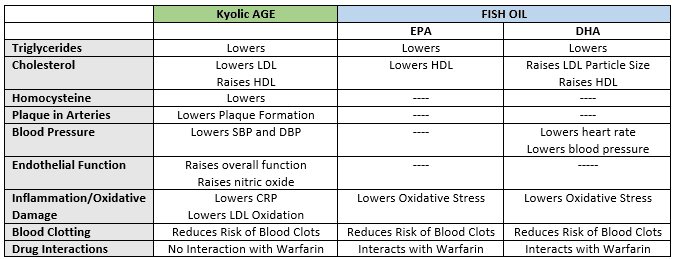
Here’s a side-by-side comparison of the heart-healthy benefits provided by AGE and fish oil:

AGED GARLIC EXTRACT VS FISH OIL

As the above chart shows, AGE’s broad-based benefits not only meet those provided by fish oil, it also targets additional important cardiovascular risks. Paired with a heart-smart diet and regular exercise, AGE is a comprehensive way to support a healthy cardiovascular system every day.

And remember, you can get the best of both worlds with Kyolic Omega-3! This formula contains 480mg of Aged Garlic Extract, Vitamin E, and odorless Omega-3 Fish oil with EPA and DHA, to support the body’s natural anti-inflammatory response. It’s truly a win-win for cardiovascular health!

This article is for informational purposes only. This article is not, nor is it intended to be, a substitute for professional medical advice, diagnosis, or treatment and should never be relied upon for specific medical advice.
The Story Behind Human Strain Probiotics

While some probiotic strains are sourced from plants or dairy, the most common bacteria in many supplements are “human strain” probiotics.

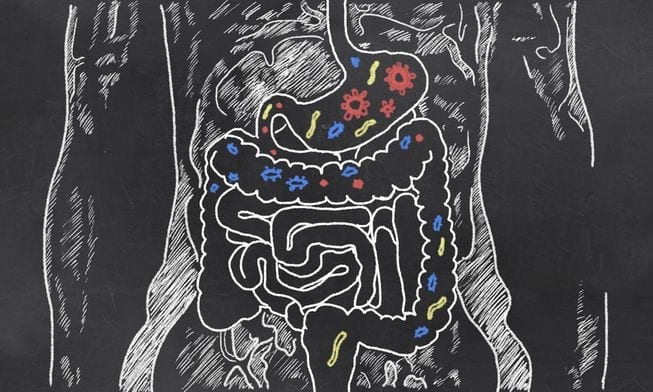
What exactly are human strain probiotics? Despite the name, human strain probiotics don’t actually contain human byproducts or ingredients. They are simply strains of beneficial bacteria that have been found to live in the human digestive tract. That means they are already adapted to thrive in the human gut. According to research in the International Journal of Medical Science, because they are native to the human intestinal tract, they are superior to probiotics from other sources. The two most prevalent types of native bacteria in your gut and in human strain probiotic dietary supplements are Lactobacilli, which are found in the small intestines, and Bifidobacteria, which reside in the large intestines.

Why Does Gut Bacteria Matter

Let’s back up a minute and review why the bacteria in your gut actually matters. Your gut microbiota contains about 100 trillion bacteria. That’s ten times more than the cells in your body! What’s more, there are more than 3 million microbial genes in your gut microbiota—that’s 150 times more than are in the entire human genome. Without bacteria, you wouldn’t exist.

The beneficial bacteria in your intestine perform a multitude of very important tasks. Not only do the human strains that naturally live in your gut favorably alter the microflora balance in the large and small intestines, they also promote good digestion and promote healthy intestinal lining . But perhaps their best-known role is the protection they offer against harmful bacteria, fungi, and viruses. The body’s own probiotics produce organic compounds including lactic acid, hydrogen peroxide, and acetic acid that increase the acidity in your intestines. This helps to prevent the “bad” bugs from reproducing. Probiotics also produce bacteriocin, natural antibiotics that kill harmful microorganisms and enhance your immune system by boosting disease-fighting cells.

According to the International Scientific Association of Probiotics and Prebiotics, the beneficial human strains naturally found in your gut don’t simply keep pathogens at bay. They also help your body synthesize vitamins and absorb nutrients. What’s more, they interact directly with your immune system to improve your overall health.

But, while the Lactobacilli and Bifidobacteria in your gut may be the sentries of good health, a number of things can put these helpful microbes in peril. Antibiotics indiscriminately kill off bacteria—both the bad ones causing your condition and the good ones that help keep you healthy. Stress, aging, a poor diet, chemical additives, and environmental toxins can also destroy your friendly flora. When this happens, harmful bacteria can run rampant, multiplying like wildfire and ultimately causing disease. That’s why it’s essential to replenish this beneficial native bacteria every day with a viable high-quality probiotic supplement.

The probiotics in Wakunaga’s Kyo-Dophilus supplements include the human strains Lactobacillus gasseri, Bifidobacterium bifidum, and Bifdobacterium longum. This unique proprietary combination contains live strains that have been deposited in an internationally recognized culture bank, ensuring that the bacterial identity and characteristics have been well documented.

But human strains are just part of what makes a probiotic supplement effective. A probiotic won’t do you any good if it’s dead on arrival when it hits your intestinal tract. Kyo-Dophilus probiotics can survive the acidic conditions, the like those found in the stomach that can kill many other probiotics. They are also shelf-stable, packaged in glass bottles, and guaranteed viable at the time of consumption. This ensures that the probiotic you are taking delivers live beneficial bacteria to your gut. But what matters most are results. Independent testing shows that the Kyo-Dophilus family of probiotics offer real, measurable benefits—both in the lab and, more importantly, in your body.


Clinical Studies 101- Learn What Goes into Conducting Product Research

Q and A with Dr. Matthew Budoff

At this time, we can point to over 800 published articles that relate to our Kyolic Aged Garlic Extract. But what does that mean exactly? We asked Dr. Matthew Budoff to give us a little insight on what is involved in a study. He has conducted over 100 studies on cardiovascular conditions, including 5 studies on Kyolic AGE.

Hello Dr. Budoff!  Please introduce yourself.

I am a cardiologist and have been involved in clinical care and cardiovascular research for over 20 years.  I am a Professor of Medicine at UCLA and Director of Cardiac Research at Los Angeles Biomedical Research Institute.

Why do physicians/researchers do clinical studies?

I think there are a multitude of reasons why investigators do research. My main motivation is to identify products or activities that improve patient outcomes. Other investigators try to understand the mechanisms of health or how therapies work, yet others are just curious and want to seek an answer.

What does ‘double-blind, randomized, placebo controlled, crossover study’ mean? Is that the best method? 

Trials vary from epidemiologic (looking at large populations to understand associations) to translational (trying to understand how basic science findings can influence human systems) to randomized controlled trials (to understand cause and effect). The most careful studies are usually double-blind, placebo-controlled randomized trials. These studies keep the investigator and the patient unaware of the therapy (double blinded) so they can’t be biased by the treatment, and placebo controlled means that there are matching pills so we can assess differences between active and non-active treatment arms. Finally, a cross-over study means that first the patient is put on active treatment, then after some period of time, they are switched to placebo.  At the same time, another group of patients are put on placebo and then switched to active treatment.

Does the number of participants really matter?

Investigators always first evaluate how many patients are necessary to determine the effectiveness of a treatment. Imagine if it took 1000 patients to show a difference, but we only enrolled 200 patients.  There would be no statistically significant difference and the conclusion would be that the therapy doesn’t work, when in fact it was just not a large enough study.  Some studies only need 20-50 patients, while other studies require tens of thousands of patients to show a significant finding.

How are participants selected?

Participants are usually selected based upon certain qualities. For example, a study may require persons with diabetes, or high blood pressure.  Sometimes studies are done in certain ethnic groups or certain age categories. Some studies are done in persons with known disease (like established coronary artery disease or heart failure).

Do all studies get published?

While most studies are published, some are not. For a paper to be published the authors need to send to a journal and it needs to be reviewed by two other investigators (peer reviewed studies). If the quality of the work is low, some papers don’t get published. Also, sometimes the studies don’t demonstrate any positive results and the authors may choose not to publish. Finally, some investigators don’t finish the work by writing up the manuscript. Writing a paper may take weeks or months and some people just don’t do that extra work to get the study published.

Wow! Knowing that so much time and effort goes into each study, we can really appreciate that Wakunaga has conducted studies on their supplements for over 45 years. That shows a true commitment to the science of supplements and the pursuit of quality and efficacy in their products.

Thank you Dr. Budoff!

ABOUT  Dr. Budoff:

Dr. Matthew J. Budoff, M.D., FACC, is Professor of Medicine at the David Geffen School of Medicine and Director of Cardiac CT at the Division of Cardiology at the Harbor-UCLA Medical Center in Torrance, California. Dr. Budoff received his medical degree from the George Washington University School of Medicine in Washington, D.C. and completed an internship and residency in internal medicine, as well as a fellowship in cardiology at Harbor-UCLA Medical Center. He has co-authored over 900 research papers, 6 books, and 36 book chapters.

This article is for informational purposes only. This article is not, nor is it intended to be, a substitute for professional medical advice, diagnosis, or treatment and should never be relied upon for specific medical advice.